Monday, April 11, 2011

AdMob survey data on Tablet usage released

Key points of report:

  1. Most important trend was that tablets are replacing time spent with PCs. 43% of respondents said that they're spending more time with their tablet than their PCs now.
  2. People are spending ~1 hr/day on their tablet, mostly at home and on weekday nights. This has implications for campaign management / optimization.
  3. Tablets are most often used for games, searching for information & email.
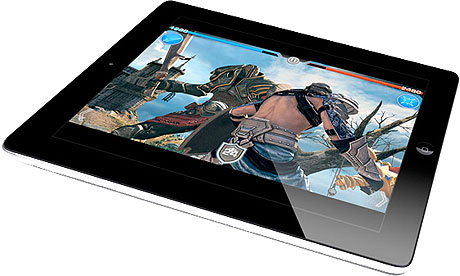
Tablet games
US tablet owners use the devices mainly for games, says a Google survey

Google survey finds games trump all other uses for tablets

Research finds that 84% of tablet owners are playing games, versus 51% who are consuming music and videos.

A survey of more than 1,400 tablet owners in the US by Google's AdMob subsidiary has found that gaming is the most popular use for these devices, considerably ahead of music, video and ebooks.

According to the survey, 84% of tablet owners play games, ahead of even searching for information (78%), emailing (74%) and reading the news (61%). 56% of tablet owners use social networking services on their device, while 51% consume music and/or videos, and 46% read ebooks.

AdMob does not break out which tablets were owned by the users, but the survey was conducted in March this year, at a point when Apple's iPad accounted for the lion's share of the tablet market in the US – although Samsung's Galaxy Tab had also been available for a few months.

The survey found that 38% of respondents spend more than two hours a day using their tablets, while another 30% spend 1-2 hours. It appears that tablets are predominantly domestic devices, with 82% of people primarily using their tablets at home, versus 11% who say they are used primarily on the go, and 7% who said at work.

28% of respondents say their tablet is now their primary computer, while 43% say they spend more time using their tablet than they do their desktop or laptop computer.

It's the games stat that provides the biggest surprise though. It's not shocking that games are popular on tablets: the App Store charts for iPad apps make that crystal clear already. However, this is the first survey where games have come ahead of email as a usage for tablets.

What's missing from Google's survey, though, is data on time spent doing these various activities – for example, comparing the proportion of heavy tablet gamers with heavy emailers.
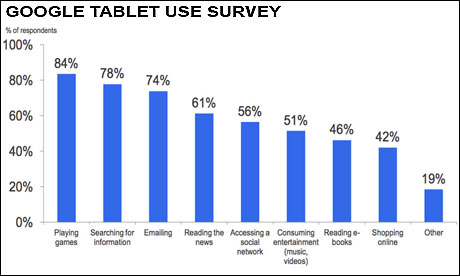
Tablet survey

Full AdMob report can be downloaded from here.

Posted via email from Technobedouin

Amazon Cloud Player steals march on Apple and Google

Amazon-cloud-player-005
Online retailer surprises rivals with launch of music streaming service and Cloud Drive 'digital locker'

Amazon has unveiled its ambitious music streaming service, Cloud Player, which allows users to play songs across a number of computers and Android smartphones.

Music lovers will be able to upload most of their existing music library – including tracks bought through Apple's iTunes – to Amazon, as well as buy new songs for digital playback.

The online retailer has stolen a march on rivals Apple and Google with the service, known as Amazon Cloud Player, with both internet giants planning their own forays into music streaming. The move also represents Amazon's repositioning as an entertainment destination, rather than just an online marketplace.

Another element of the service, Amazon Cloud Drive, works like a "digital music locker" where users can upload thousands of songs and listen to them via Cloud Player on any computer or Android smartphone.

"Our customers have told us they don't want to download music to their work computers or phones because they find it hard to move music around to different devices," said the Amazon vice-president of music and movies, Bill Carr. "Now, whether at work, home, or on the go, customers can buy music from Amazon MP3, store it in the cloud and play it anywhere."

As an introductory offer, Cloud Player is free to Amazon account holders, although users can pay to increase the amount of music able to be stored on Cloud Drive. Customers start with 5GB of storage space – equivalent to just over 1,000 songs – and those who buy an MP3 album from the Amazon store will be upgraded to the larger 20GB service.

Apple and Google are said to be planning similar ventures, while Sony's Music Unlimited also offers a digital music locker, but charges upwards of £4 a month. Agreements with all four major record labels are thought to be the sticking point for Apple's and Google's streaming services, with rights owners apparently unhappy with the idea of a one-off payment each time a track is played on any device.

Beyond Oblivion, an online music site partly owned by Rupert Murdoch's News Corporation, is proposing to woo rights holders by paying them a royalty each time their music is played. The service, which secured $77m (£47m) on investment earlier this month, is yet to launch and negotiations with music labels said to be at a "very advanced stage".

Amazon said it has sidestepped legal uncertainties about allowing users to upload music from their computer – some of which may have been downloaded illegally – by being the equivalent of any other storage device, such as an external hard drive.

The Amazon director of music, Craig Pape, said: "We don't need a licence to store music. The functionality is the same as an external hard drive."

• Amazon's online retail rival eBay yesterday stepped up its attempt to become the primary destination for internet shopping by buying GSI Commerce, an online services firm, for $2.4bn. The acquisition will allow eBay to expand beyond its network of small retailers into the larger retail market.

Source: Guardian Tech

sent from my Nexus S

Posted via email from Technobedouin

Tuesday, April 05, 2011

CONTROVERSIAL Wiki Leaks - American view on Greek media

media.pdf Download this file
ID : 71198
RefID : 06ATHENS1805
Date : 13/7/2006 6:50:00 πμ
Origin : Embassy Athens
Classification : UNCLASSIFIED//FOR OFFICIAL USE ONLY

SUBJECT: HOW TO READ THE GREEK PRESS: A GUIDE FOR THE UNINITIATED

ATHENS 00001805 001.3 OF 003ENTIRE TEXT IS SENSITIVE BUT UNCLASSIFIED - PLEASE HANDLE ACCORDINGLY

1. (SBU) SUMMARY. At first glance, the Greek media may resemble the media in the U.S., with a mixture of broadsheets and tabloids, national and local television and radio stations, and constitutional guarantees guarding the freedom of the press. Closer inspection reveals a Greek media industry controlled by business tycoons whose other successful businesses enable them to subsidize their loss-making media operations. These media operations in turn enable them to exercise political and economic influence. The result is that the media often provides an image of national and international events that is almost uniform but for its division along party events that is almost uniform but for its division along party lines. Similarly, a uniform anti-Americanism is injected into nearly every issue, but has little effect on the bilateral relationship. END SUMMARY.

The History of the Greek Media, from Homer to the Home Page

2. Homer reported on the Trojan War a few hundred years after it happened, and used the facts of the war to create a poetic tale of battles among gods, with men as pawns. Current Greek media uses the same blend of fact and fiction, with an equally judicious dose of deus ex machina (outside forces) that controls events. The first modern day Greek-language newspapers were established in Vienna and Paris in the 18th century and were an important factor in the Greek fight for independence from the Ottomans. With the founding of the modern Greek state, the tradition was established of blaming an outside power (first the Great Powers and then the U.S.) for all ills that befell Greece.

3. Greece currently has about 160 newspapers, 180 television stations, 800 radio stations, 3,500 magazines, and just 10 million people. (Portugal, with the same population, has 35 newspapers, 62 television stations, and 221 radio stations, according to the "World Factbook" of 2004). How can all these media outlets operate profitably? They don´t. They are subsidized by their owners who, while they would welcome any income from media sales, use the media primarily to exercise political and economic influence, and therefore care marginally less about turning a profit from their media operations. Because there are no subscriptions or home deliveries in Greece, newspapers have to sell themselves from newsstands by grabbing the attention of the casual passerby. This means that even the occasional calm and partially accurate story will have a misleading or untrue headline that often has nothing to do with the story. Still, the media utilize sensationalist headlines and stories to capture readers and the all-important television ratings that determine the distribution of advertising revenue. Newspapers also use such tools as DVD and book giveaways.

READ MORE OF THIS VERY INTERSTING & FRANK INSIGHT INTO A MEDIA WORLD by downloading the PDF attached..

Posted via email from Technobedouin