Monday, September 13, 2010

YouTube tests live video streaming

Google is testing live video streaming on YouTube, in a move that will challenge the likes of Livestream, UStream and Justin.tv

YouTube livestream trial

Google has launched a two-day livestreaming trial on its video-sharing website, YouTube
The two-day trial, in association with a number of content partners, including Rocketboom and Young Hollywood, is aimed at testing YouTube’s ability to deliver consistent live streams, and to experiment with live comments, to which content providers can respond in real time.

The alpha testing, which starts today, is Google’s first step towards providing a full live-streaming service through its YouTube website. Live streaming has been mooted for years, and YouTube has broadcast one-off events live, including U2’s concert at the Rose Bowl in Pasadena, cricket from the Indian Premier League, and a State of the Union address from Barack Obama.

CitizenTube, a channel on the YouTube website dedicated to political discussion, has also regularly hosted live streams.

"This is just an initial trial, a first step," said Josh Siegel, a product manager at YouTube. "We're going to look at a whole bunch of data about the performance of our new platform and then, based on that, make decisions about how we'll open it up, with the goal of opening it up to all of our partners over time."

However, industry experts believe any live-streaming service will be limited to professionally produced content provided by YouTube’s partners, rather than live videos uploaded by users.

“This isn’t surprising – there’s obviously a big infrastructure hurdle involved with streaming content from so many people,” said Jason Kincaid, a reporter with industry blog TechCrunch.

“But, more importantly, there’s also a greater risk that someone will stream a suicide, or something similarly awful.”

Google said that live streaming was “a natural evolution to online video” and added “an extra level of engagement” for YouTube’s audience.

YouTube is the biggest video-sharing site on the internet, with 24 hours of video uploaded to the site every minute, and an average of two billion views per day
By Claudine Beaumont, Technology Editor
Source: Telegraph.co.uk

Posted via email from Victoria Alexis

Friday, September 10, 2010

Google adds sat nav for walkers on Android ((tag: Google, Android, Google Maps 4.5, Streetview)

Specially designed for the lost pedestrian in us all
google-maps-4-5-for-android-goes-walker-friendly

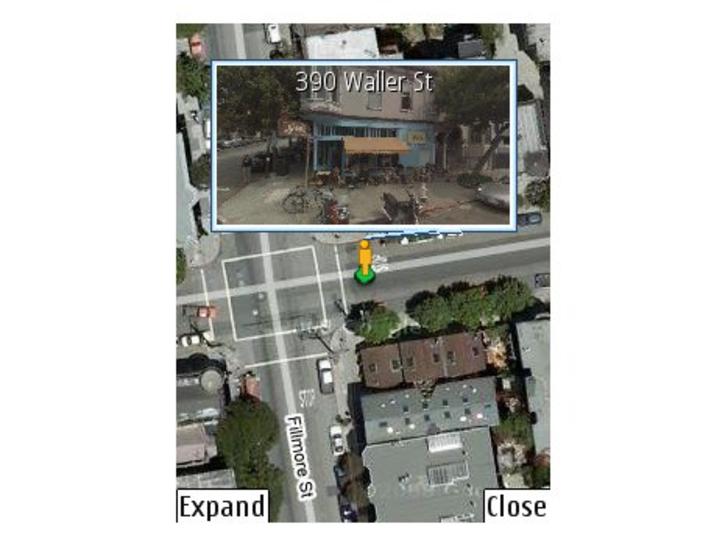
Google has announced it will be bringing out Google Maps 4.5 for Android today, complete with satellite navigation for walkers.
Speaking at a small Google Mobile event in London, Hugo Barra, director of products for mobile at Google announced that the new update will be available in 'just a few hours'.
Google wanted to offer walkers the same free and easy way to find their ways around cities that cars are afforded, and has come up with a number of feet-friendly features:
"We had the idea that people are now navigating using Google Maps, getting turn by turn navigation in your car, so now we're launching a walking version of that."

Hilly


"The new version of Google Maps will choose routes that are pedestrian only, such as not going down very hilly roads if there's an easy way to get around.
"It will also turn on satellite view automatically, which is really helpful for getting your bearings so you can know what's around immediately.
"You can also mute navigation voice guidance; sometimes you might not want Google telling you to turn left when on the street, so you can turn it right down, and it will vibrate every time you need to look at it and get a new instruction."

Enhance!

Google will also be bringing new features to Streetview on the mobile, where 3D animations and interaction will be offered.
Users can zoom around the map by clicking on almost any part of the picture, and it will zoom there in a much slicker way than before.
Android lovers can search for the new update in a few hours, so keep your eyes peeled for Google Maps 4.5 on your handset.

By Gareth Beavis

Posted via email from Victoria Alexis

Thursday, September 09, 2010

Google Instant keeps the search giant at the head of the pack

The 'fundamental change' that will save the world's web users 111 years per day is just the first step in the search giant's

Google's new way of searching the internet, called 'Instant', starts predicting results as soon as users begin typing

Google's new way of searching the internet, called 'Instant', starts predicting results as soon as users begin typing


The way we find information on the internet underwent a “fundamental change” last night, as Google announced a product it calls “Instant” search results. In essence, it means the web giant will now “autocomplete” our every word.

So as soon as users start typing in the Google search box, results will begin to appear. Press “w” and collected data tells Google that you’re most likely to be searching for “weather”, and a results page will immediately offer you the top results for weather. Carry on typing and the results will constantly update: so if you’re searching for “War and Peace”, you’ll see a stream of suggestions for search queries from weather to war to, probably somewhere around the second letter “a”, results for Tolstoy’s epic novel. Top suggestions will be listed as you type, and users can scroll to the one that matches what they’re after. You need never write a whole search phrase again.

The move, much trailed via changes to Google’s logo on its home page, is the first fruit of the company’s bid to work out not just what its users are thinking, but also what they’re going to think next. With one billion searches made every day, this new evolution will save up to five seconds per search; globally, they work out that this will save the world’s web users a total of 111 years per day.

It will take the average search from around 24 seconds to around 20. On very slow internet connections, Google will push users to the original service, but bandwidth is not being anticipated as a problem.

For now, the new feature is limitted to users who are signed in to Google, but it will be extended around the world in the near future. The service is based simply on the data that Google has collected, anonymously, from its millions of users around the world, rather than on individual search histories, however, so the company hopes that concerns of privacy campaigners will be limited.

As Jonathan Effrat, Google’s search product manager, told European journalists, however, it remains to be seen what advertisers think of this innovation. Google is, it should not be forgotten, an advertising company, and so faster search results mean users will spend less time looking at the paid-for search results. And “it remains to be seen”, too, what website builders and those paid for “search engine optimisation” will make of it. Google hopes that the new results will not only ensure an element of serendipity into searching, but will also prevent website designers tricking the system by working out which words make their web pages rise to the top of results.

Although Google has also announced this week that its much-publicised television service will launch by Christmas, searching the internet remains its core business. This new product, once again, puts it firmly at the head of the pack.

By Matt Warman, Consumer Technology Editor
Published: 5:59PM BST 08 Sep 2010
Source: Telegraph

Posted via email from Victoria Alexis